



Listen to the Song in the Audio ↑
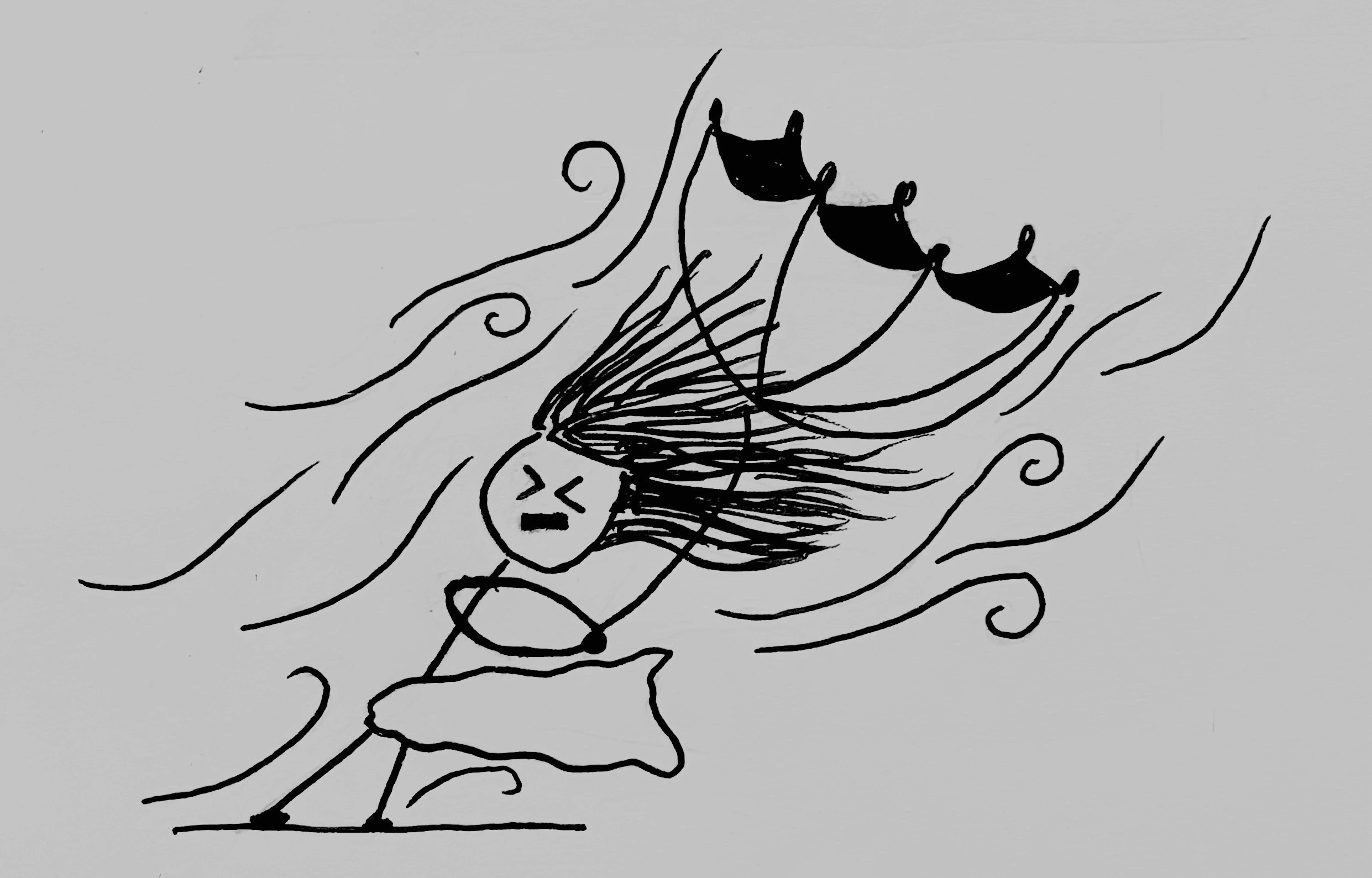
Read the Story (& Science) Behind it ↓
The Puzzling Paradox of Peace
The Story Behind the Song
The conditions of life can be rough -to say the least. I don’t really like thinking about it, honestly. I don’t love admitting that no matter how well I understand the weather, I can’t control it. I don’t like accepting that no matter how well I take care of my health, one day I’ll lose it. I definitely feel uneasy with anything that’s gotta do with competition (especially when it involves pain or violence). And I’m really not a fan of losing the things that I call precious.
As such, my daily love notes to our nature tend to be pretty pictures: picturesque sunsets and fuzzy bumble bees, sweet little treasures and seedlings flourishing. Though every once in a while I’ll post a poop pic for a couple of laughs, I tend not to share the gory obliteration of ants (even if it’s done organically).
That being said, I understand that not everyone gets to choose the extent to which they imagine the blues. There’s real people who live within the painful scenes of the news. It’s not easy to watch, harder to touch, and even harder to live through.
In my life I’ve loved people from all kinds of backgrounds, of which many have endured terrifying scenes and sounds. And the more I’ve loved them, the more their stories merged with mine. Whether the trauma’s primary or vicarious1, shedding scars takes time.
Even little losses can feel monumental, especially when they’re in places that feel fundamental. Just the other day I was surprised as I lost access to a favorite place of mine. I know it’s not the end of the world- but any kind of loss sends ripples: signals and proof that nothing’s set in stone; at any time, from any direction, any of it could go.
And when it does, it hurts.
As such, I’ve spent much of my life trying to avoid those things, fearing their happening, or convincing myself that if I’m a really good girl, I’ll live forever in peace with supple skin, sturdy feet, and perky little boobies.
Alas- I’m already seeing signs that at least two on that list aren’t happening (can you guess which?).
No doubt it’s hard to admit that loss and pain are bound to happen. It’s even harder to want it (for the silver linings).
Still- the conditions of life are such: you can’t grow food without the rain and sun. You can’t get stronger without a few grunts. You can get rich soil without rotten fruits. Without the hawks, the world is littered with mouse poop.
It feels cliche, but I suppose that’s cuz it’s obvious. Even so, I don’t like to think about it-
except that I do. I worry all the time. A part of me is slightly freaked out everyday and every night. It used to be really bad: panic attacks, insomnia, and a plugged-up pooper- I’ve been quite the worrier.
But I sleep better now, and I poop every day. I can even concentrate.
What’s strange is that in the time that I’ve been soothing my anxieties, the world has not gotten any less scary. If anything, the world has doubled-down on proof that it’s terrifying.
This is surprising because, for so long, I took three paths to address my fears:
Do something to numb or distract; pretend they’re not there.
Fight (with all my might) to force the world to do better.
Create something that makes the threat smaller.
The first approach was counter-productive; the more I ignored or numbed by fears, the bigger they got (and more I needed to numb). But the more I numbed, the more they kept growing. Whether the fear was real (and actually needed addressing) or all in my head (and totally imaginary), suppressing my fears has been a super scary spiraling.
Then, the second approach also backfired, in more ways than one:
First of all, most sentient beings don’t like to be forced to do (or not do) anything. Force and fight tend to make more force and fighting. Life does not feel safer here.
Second of all, constantly fighting to make the world safer left me feeling like an endless failure; even pains and losses that were out of my control sent me deep into a shame spiral. Every discomfort threatened my confidence with pain-pointed-proof that I was inadequate. But life got even scarier as I felt ever more powerless.
This loss of confidence made the third approach (to create something that makes the threat smaller) an increasingly difficult option: the less confidence I had to address the situation with my own power, the more I sought to numb myself or force others to do better. Again, there was born a negative spiral.
But, on the off chance that I could do something with my own creativity to change the situation that felt so scary, there’s always been the chance of some unknown factor backfiring. This is the vulnerability of any technology: you may not know the consequences until they start happening. These situations have been the hardest of all; when I thought I did something good, only to make matters worse, when the fear that I eased only gave birth to a whole new fear in a whole other form, but just as scary as the one from before. These surprising backfires broke my confidence like no other as I looked in the mirror and pointed the finger: here not only was I failure, but I caused more hurt; was I the monster?
All things considered, I’ve needed another approach for reconciling with life’s bad weather; one that doesn’t require denial, numbing, or pointing the finger.
Amazingly, I’ve found it in love with the living mirror.
I know it sounds sickeningly sappy (and I, too, have resisted), but, overtime, the results have clearly spoken:
As I’ve looked for a reflection in everything, love has been an outpouring.
And with This Love, peace has come with the courage to care for everyone.
And as I’ve cared, purpose has planted with so much to give to all of our challenges.
And with purpose, endurance has grown with the confidence to handle whatever I’m thrown.
Now, with confidence, fear’s less scary; it’s ok to be afraid when the heart is enduring.
But, it didn’t start that way (and it’s still a practice -everyday).
At first, the living mirror was a horrific reflection, terrified and threatened. Everything I’d feared and hated stared back at me, taunting me with the same disgrace that I’d been dishing.
How (and why) would I relate to the crap or the dirt? In the mirror of my own rejection, how could I keep my worth?
And what about the parts that actually feel different? If diversity is a key to life, what’s the mirror of the opposite? The night’s not the day. The water’s not the sun. How do things so very different find a true reflection?
Over time, the questions continued pointing to ecosystems, which eventually shifted my identity with them: like the mind can’t compute without the heart that beats, I’ve come to know myself as every part of my body.
It’s in this shift of identity that things really began changing. As everything in nature’s body serves a purpose, I started looking for all the ways that it all fits in perfect.
It’s in this wonder, and in This Love, that I’ve found something sustaining, something stable to hold onto when the sky starts falling:
I won’t say its name, or try to contain it, but, with the living mirror, it does awaken.
Still, I am an animal that’s made to be self-centered, wired to avoid pain and take as much as I can gather; made to seek convenience (no matter the cost), to fight for my survival (no matter what’s lost).
That being said, it’s been an odd leap to accept the paradox that I actually gain more life the more I accept its loss, that suffering is soothed by embracing all the pain, that shameless vulnerability makes the world less frightening.
Still- it doesn’t sound fun, which is why I’ve made it musical. The more I make my life an art, the more it becomes lovable. Joy is not something that I wait to be bestowed, but an active choreography between my head, and heart, and toes.
With every word of every poem, and every lyric that I sing, I affirm that love’s as infinite as the air we breathe.
May each breath fill you with peace.
The Abiding Anchor of Air
The Science Behind the Song
As unstable and impermanent as life can be, some things are quite sustaining. Air, for example, is mighty consistent.
Perhaps that’s why it’s easier to come to peace when I focus on breathing; when everything’s up in the air, air continues giving.
So here’s some nerdy facts on how air sustains through all its endless factors of change:
First of all, what is air?
According to Oxford Language (on Google), air is “the invisible gaseous substance surrounding the earth, a mixture mainly of oxygen and nitrogen.”
Which is to say: it’s not nothing.
Both oxygen and nitrogen enter the air through biological cycles. Nitrogen is released from bacteria that converts nitrates (in the soil) into nitrogen gas (in a process that’s called denitrification2, but don’t worry- I won’t go into all that). Oxygen enters when plants exhale it during photosynthesis (a process that, I’d assume, most folks understand enough for our purposes. But, did you know that the tiniest photosynthetic organism on Earth, which is an ocean plankton, produces up to 20% of our oxygen, which is more than all the tropical rainforests3???).
Anyhoo, for our purposes, what matters is to recognize that, though invisible, air is made of particles. The amount of particles that air has within any given space is called: air density.
That being said, the particles of air are subject to gravity. Air pressure, therefore, is the accumulated weight of all the particles in the air (within a vertical column) over a given area. As such, when air has greater density (more particles), it also has greater weight -and higher pressure. Consequently, air pressure and air density are always directly proportional to each other- as density goes up and down, pressure always does too (watch a neat graphic video about air pressure and density here)
With that in mind, there are two main factors that impact air pressure and air density:
Temperature4: heat causes air particles to expand. This is because heat is a form of energy. So, when the particles of air get more energy (through heat), they start moving around. As they move around, they take up more space, causing them to be further apart. With more space between particles, there’s fewer particles within a given space. Therefore, the air becomes less dense (which also means that it has less pressure).
Elevation: When air is closer to the Earth’s surface, gravity pulls air particles closer together. Then, as air gets further from the surface of Earth, gravity’s effect gets weaker. This means that in higher elevation (where gravity has less force on air), air particles spread out more. This makes air less dense in higher elevations (which also means that air has lower pressure in higher elevations).
These two qualities of air, density and pressure, form the foundations for understanding all the important phenomena that’s related to air, for example:
Why hot air rises: Because air is less dense when it’s warm, it’s more buoyant. This is because “gravity pulls cooler, denser air toward the Earth’s surface. As the denser air reaches the Earth’s surface, it spreads out and undercuts the less dense air, which in turn forces the less dense air up and into motion, causing it to rise.5” In other words, hot air rises as cool air sinks.
Why clouds tend to form higher in the sky: as heat evaporates moisture into vapor, the warm (and moist) air rises. But, as it rises in elevation, it spreads out. As it spreads out, it cools6 (this is because the process of expansion uses energy, and less energy means less heat). This cooling (called adiabatic cooling7) causes water to condense into clouds (though fully understanding all this also requires a good understanding of dew point and relative humidity. But that’s a whole other story.
Why mountain-tops tend to be cooler than valleys.
How wind is formed: Wind is caused by air pressure gradients. An air pressure gradient is the difference between areas of high and low air pressure. With this difference, the pressure gradient force “tries to equalize pressure differences ...[which] causes high pressure to push air toward low pressure.8” This push of air is what we call wind. The greater the difference in pressure, the stronger the wind.
Though the list of air phenomena could go on and on, that’s enough to convey what’s most meaningful for me in this song, which is to marvel at the fact that even as air gets more or less dense, it’s still there for me when I’m stressed. Whether I’m at the top of the mountain or in the depths of the valley, air stays steady - always ready for breathing.
That being said, it can get dirty. Volcanoes, smoke, smog (and other stuff like dust) can clog air up (making it much less appealing to breathe). But, even then, air is resilient. It even has its own purification system! Through a process called -wait for it- photochemical oxidation, a molecule in the atmosphere, called hydroxide (OH), helps break down pollutants9, which makes them more water-soluble for the cleansing process of precipitation10.
Which is to say: air needs assistance with cleaning itself out, for which plants and water are a big help! In a process called atmospheric deposition11 (who feels smart now?), particles are removed from the air by transferring them to the ground. In wet deposition (cuz they’ve got a word for everything), water helps clean the air in one of two ways:
Clouds use pollutants as condensation nuclei (which are the particles that water holds on to when creating clouds). The fancy name for this is: in-cloud scavenging (or rainout).
Falling raindrops collect pollutants to carry them to the ground (which is called: below-cloud scavenging, or washout).
Still, not all deposition is wet. In dry deposition, pollutants are continually brought to the ground by wind and gravity (who, by the way, said that they’re pissed that they didn’t also get cool job titles with the word “scavenging”).
But deposition isn’t the only help that air receives when it’s gotten dirty. Let’s not forget about plants and microbes (who also do their fair share of the cleansing). Plants help in the process of photosynthesis when they take in carbon dioxide12. Microbes also do their part as they eat pollutants to survive13.
And there you have it: the team effort of air’s composition and resilience (and, if you’ve gotten this far with me, I sing your praises cuz it really can get lonely with such a dorky disposition).
Still, it amazes me how the air stays consistent for every single breath. Understanding what goes into it really has given my inhale some depth.
So thanks for nerding out with me.
Love’s Super-Dooper Surprising Stability
The Gift of the Song
Ultimately, amplifying the things in life that I can depend on is what gets me through the times that hurt or scare me (and my favorite amplification is art). With that in mind, air might seem basic, but it’s actually quite renowned for its ability to stabilize through uncertain times; there’s tons of research on how meditation can benefit our lives.
But breath isn’t the only thing that keeps me going:
When push comes to shove, what gets me through is a good pair of gloves, pancakes and sushi, and good finds from thrifting, and any kind of treat that’s easy for sharing.
Really tho: all those things are special when they come, but it’s that word (that rhymes with dove) that really has helped me to rise above.
I can’t seem to sing its praises enough.
It happens almost miraculously:
from the discards and rejects, to find opportunity
in the smashed up pieces, to see silver linings,
to soothe my wounds with compassion and care
when what’s been lost is beyond repair,
to have tolerance with my knee-jerk reactions
and motivate me through all my resistance.
What else offers mercy for being human?
That being said, it’s taken a long time (with years and years spent alone) to realize that the kind of love that sustains me doesn’t come from check-lists of lovability. Check: my leg hair’s impeccably shaved. Check: he wears big-enough socks. Check: this year she’s been so well behaved that she won’t find coal in her box.
Still, the list is tempting because standards in life do have their place, and there are some games that require an ace. Some recipes do call for precision. Some missteps will end in collision.
That’s why making mistakes can really be scary. That’s why it makes sense that we would be aiming. That’s why high marks feel like a trophy, but falling short is a gateway to loathing.
And, that’s why I can’t take credit for This Love that gets me through; if left to my own devices, I’d not be singing to you. I might be stuck in a puddle of grump, plugged and pouting with a lump in my rump. I might be frozen in a mirror of rage (I still get defensive when I feel afraid). My heart still gets weak when I’m in pain, and when I’m overwhelmed, love can feel very, very (and I mean super-dooper) far away.
Still, This Love comes to me every day, from the very first moment that I awake -which has not always been pleasant. Sometimes I wake up distraught and depressive. Sometimes it takes hours or days to find my footing in a positive place.
But, like the air that remains under high and low pressure, This Love is immune to all of the weather. Though my human heart can be as fickle as the wind, shifting with the climbs and slides of valleys and mountains, This Love sees the pictures that I don’t like to post with glimmers of gratitude, and snippets of hope. It points to the soil when my branches have snapped. It points to the flowers that have grown from the crap. It points to the sleep that the dark night affords, to the cycles, to the balance, and to all that’s restored.
Even so, it makes no promises that can’t be kept. It doesn’t change life’s conditions. It can’t save me from death. Instead, it’s here to carry me with wonder and gratitude for all the miracles of our whole nature, including me and you.
Patient and promised,
in every breath, may This Love find you.
Check Out More From This Wonderful World:
Love Songs to Our Nature
It’s not always easy being human, but it sure does help to sing through it! In a mix of music, metaphor, and ecology, every song and story affirms the heart of our nature through all of life’s weather and wonders.
Love Notes to Our Nature
Every day I look to the world around me for reflections to keep my heart going. Check out these daily love notes here:
Know someone who could use a lift? Share this song with them 🕊️
Let’s Stay in Touch!
By subscribing to This Wonderful World, you can access the heart of our nature right in your inbox.
https://oklahoma.gov/content/dam/ok/en/odmhsas/documents/a0001/hh-oksoc-trauma-categories-types-of-trauma.pdf#:~:text=PRIMARY TRAUMA (DIRECT TRAUMA) IS TRAUMA EXPERIENCED,AND INCLUDES BOTH PHYSICAL AND PSYCHOLOGICAL INJURY.
https://www.sciencelearn.org.nz/resources/960-the-nitrogen-cycle
https://oceanservice.noaa.gov/facts/ocean-oxygen.html#:~:text=Scientists estimate that roughly half,smallest photosynthetic organism on Earth.
https://www.grc.nasa.gov/www/k-12/Summer_Training/FranktonES/Convection_main_page.html#:~:text=As the molecules heat and,heated and contracts when cooled.
https://www.noaa.gov/jetstream/upperair/parcel-theory#:~:text=Gravity%20pulls%20cooler%2C%20denser%20air,motion%2C%20causing%20it%20to%20rise.
http://www.atmo.arizona.edu/students/courselinks/fall12/atmo336/lectures/sec1/rising.html
https://en.wikipedia.org/wiki/Adiabatic_process
https://www.noaa.gov/jetstream/synoptic/origin-of-wind#:~:text=The pressure gradient force (Pgf,only force acting on it.
https://www.thebrighterside.news/post/earth-s-atmosphere-can-clean-itself-major-study-finds/#
https://www.mpg.de/990456/earths-atmosphere-cleaning#:~:text=We now have a clearer,very sensitive to environmental changes.
https://www.epa.gov/cmaq/air-surface-exchange-process-overview#:~:text=(2014).-,Deposition processes,by precipitation (wet deposition).
https://pmc.ncbi.nlm.nih.gov/articles/PMC8279815/#:~:text=A well-known process carried,oxygen and release carbon dioxide.
https://kids.frontiersin.org/articles/10.3389/frym.2024.1386253#ref2


