

Listen to the Song in the Audio ⬆
Read the Story Behind It ⬇
Sometimes love feels utterly hopeless, impossible even.
This is why, as ruthless as life can be at times, everyday I remind myself that life does -in fact- still have a caring side. It’s what keeps me going: If I didn’t believe in love, there’d be no way that I’d put in the effort or take the risks to keep my heart beating in the face of everything that hurts and scares me (which is a lot).
Still, it can be tough to believe in something that can feel so far away. In the last article of this series, I asked if love is even possible when life gets scary. The science of our minds (and daily doom scrolling) can make it seem unlikely.
So, I’ve been taking a look at our history where I’m grateful to have found plenty of proof for love’s relentless victory:
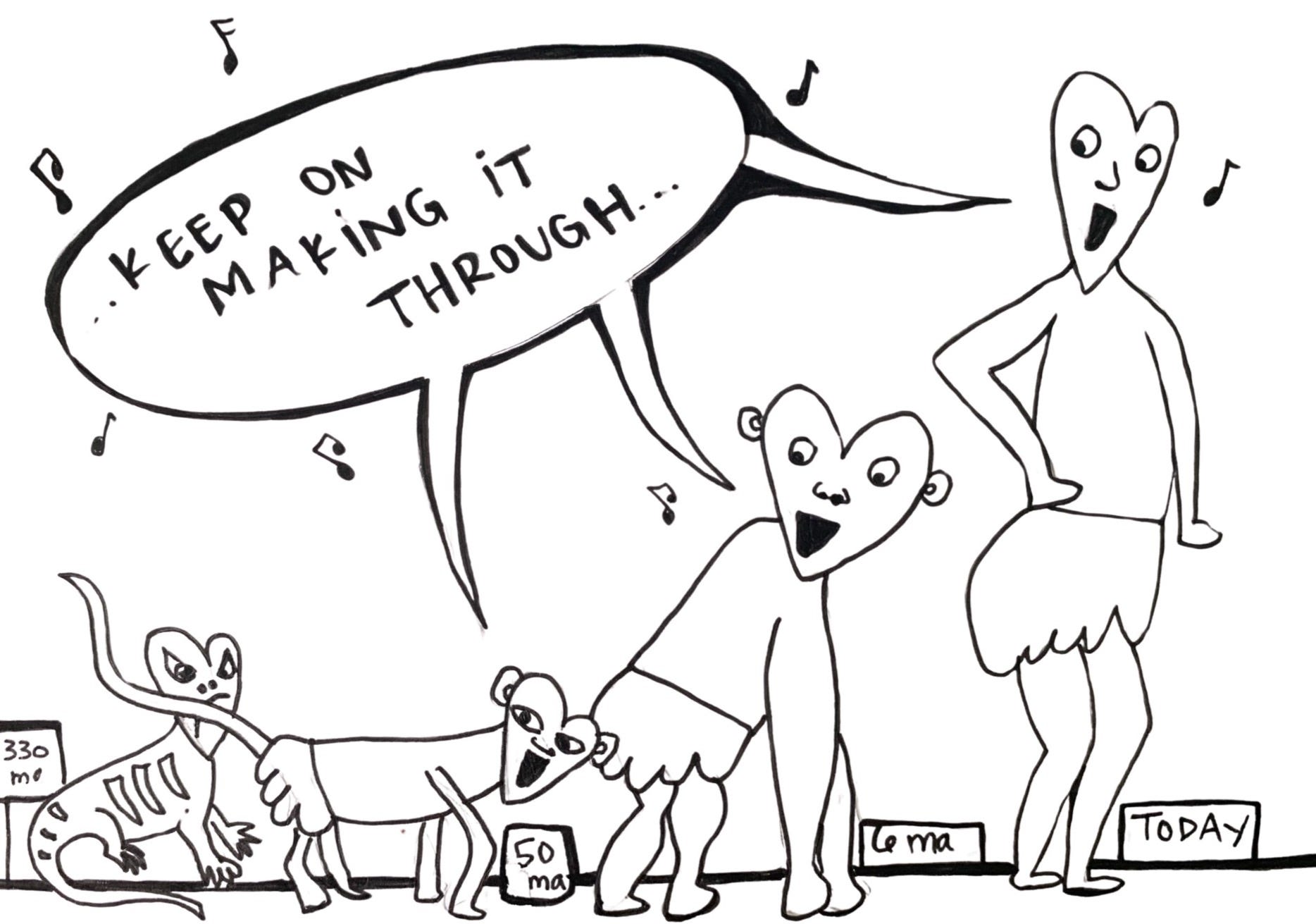
In the face of life’s greatest threats, the heart really does keeps us going.
Here’s (some of) the story:
The Evolutionary Victory of Caring
Despite all the selfish, competitive and outright violent instincts that make love difficult for mammals (like us), caring for each other has long been a key component of our survival, and of life in general. It’s an evolutionary strategy. From plants (like sunflowers) who kindly share root resources with their neighbors1 to worker bees who devote their lives to serving their queen2, supporting each other’s wellbeing is a legitimate approach for overcoming some of life’s toughest challenges.
For us mammals, care-for-others goes back before we were even warm-blooded. It’s thought, for example, that therapsids (the cold-blooded ancestors of mammals) were able to survive the “Great Dying” (about 20 million years before the dinosaurs) because they cared. At a time when 90% of life on Earth was lost due to massive and sustained volcanic eruptions3, instead of freaking out and trying to hoard every itty bitty sun-fried kale chip that they could rummage up, our super-dooper great-great grandfathers (to the 15th power) began to take care of their young. Daddies to the recuse! By fathers caring for the kiddos, not only were the kids able to grow up strong, but mamma got to save all her energy for pushing out new babies (a strategy that can be “advantageous in times of crisis4”). In fact, this kind of parental care and teamwork “may have saved mammals and their ancestors from mass extinction events countless times.5” (Check out the new documentary Mammal Origins from PBS)
Then, while dinosaurs roamed the earth, our little mammal ancestors (who inherited the keys for lactation from their egg-moisturizing ancestors) further developed lactation6 as a way of avoiding interactions with the big scary dinosaurs (cuz if mama can make food for the babies inside of her body, then the babies don’t need to forage as often). Lactation also helped our little mammalian ancestors to survive the dinosaur extinction as lactation allowed babies to be nourished when resources were otherwise very scarce7. So, despite the fact that lactation comes with significant costs for mothers (it leeches their nutrients and makes them more vulnerable to predators), our great-great (extra great) grandmothers took one for the team so that -one day- we all could have the luxury of ice cream.
But this kind of care for our kids didn’t stop there. Humans took parenting to the next level when we became bipedal. Being able to walk on two feet had enormous evolutionary advantages, such as seeing over tall grasses, traveling long distances, and freeing up our hands to carry tools and babies8. However, as bipedalism narrowed our pelvises, it created a problem: How can such big brains come out of such little spaces? 9 Evolution’s solution: Birth babies who are born with little brains (that aren’t fully developed yet).
Though recent discoveries have challenged the “Obstetrical Dilemma” by saying that the real evolutionary force that drove our premature births was not our pelvis sizes but competition for energy resources (between the gestating baby and the mother)10, the end-result was still a game-changer: brains that significantly develop after they’re born. This development of our brains as children (instead of in the wombs) gave rise to humans as learners who can rapidly change and adapt to the world around them in real time11- one of the keys to human intelligence and resilience12 (nowadays scientists call this neuroplasticity, which I’ll talk more about in the last article of this series).
However, this learning power didn’t come without a cost. When humans started growing their brains primarily outside of the womb, mothers became evermore vulnerable to the stresses of raising their children. Evolution’s solution? Cooperative Breeding1314. The presence of helpless babies gave rise to social support systems made of fathers, grandmothers, and even folks who weren’t related! Everyone pitched in while the little-kiddie-brains ate all the food and ran around causing a ruckus (without making any meaningful contribution).
Indeed, little by little, life for humans became more and more dependent on folks caring for each other, despite the costs. In science, this is called biological altruism: when the cost of caring for another is greater than the benefits that are gained for the individual that’s giving15. In regular-people talk, we might call this love.
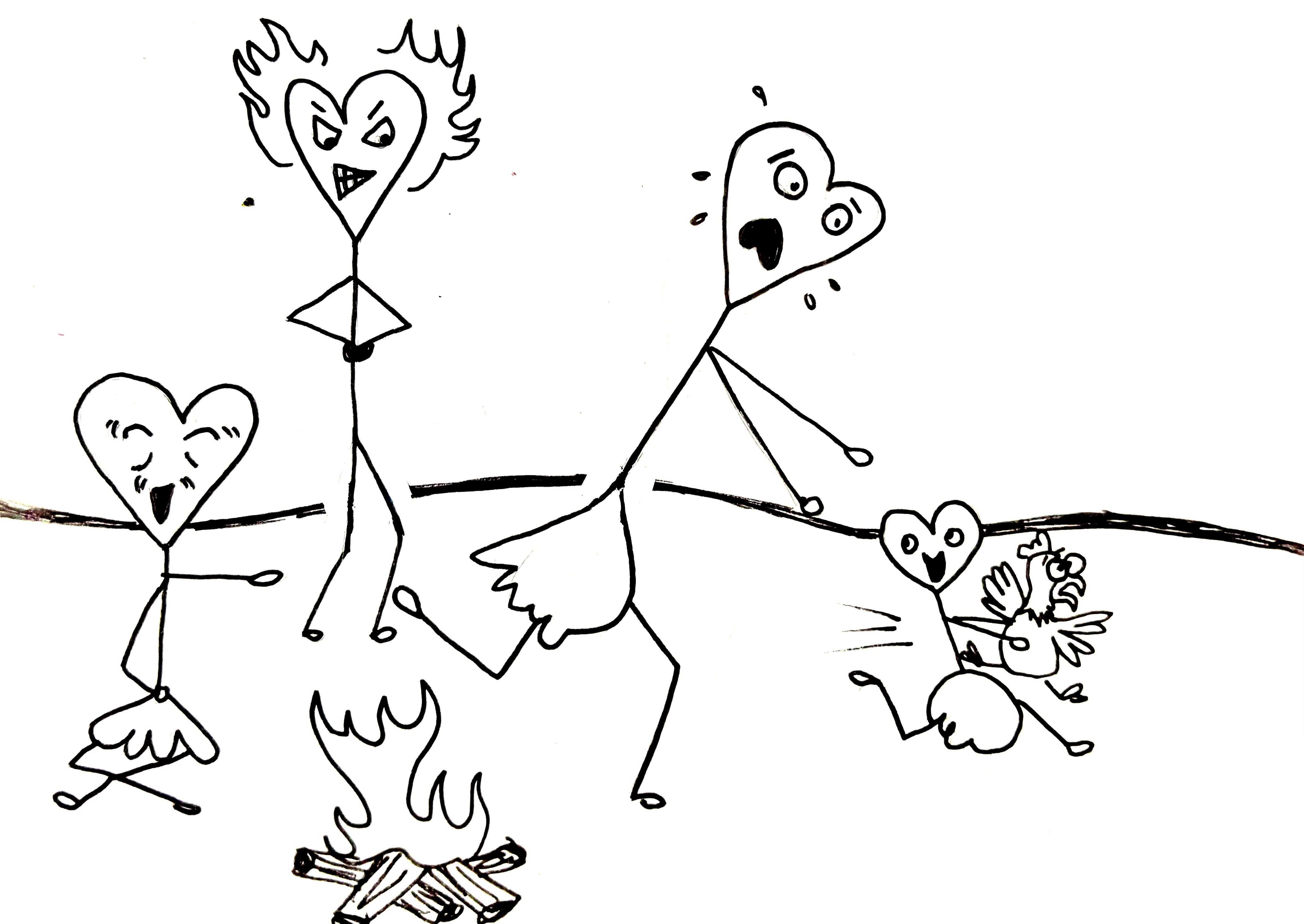
However, from an evolutionary point of view, caring for others doesn’t always make sense unless it’s directly related to supporting the survival of our DNA. This is because the theory of evolution16 has led some to believe that the big purpose of life is to survive and secure the continuation of our genes (through reproduction)17. Within this theory, it makes sense that mothers and fathers might take some hits for kids that carry their DNA (in science this is called kin selection.18).
But not all care in nature is limited to our kin. There are many examples of animals who also help non-relatives, as long as the help is reciprocated. Vervet monkeys, for example, have been found to “aid unrelated individuals if those individuals have behaved affinitively toward them in the recent past.19” In science, this is called reciprocal altruism20: I’ll scratch yours, if you scratch mine.
What’s not well understood in science, however, is the pure altruism of giving to strangers without any expectation of return (a behavior that has a remarkably high level of occurrence in humans compared to other primates21). One theory that seeks to explain this phenomena is that groups with altruistic members are more likely to survive (as a group) than groups with more selfish members22. It’s a pretty plain-sight explanation that most of us are probably familiar with: groups tend to be stronger when they work together.
The problem with this theory, however, is that even one bad-apple can spoil the bunch. Throw one free-loader into the mix and it corrodes the whole system, draining those who give freely while benefiting those who contribute little, but take a lot. We all know the kind. We’ve all worked on school projects. From an evolutionary point of view, this creates a problem: natural selection may favor groups who cooperate over groups who don’t, but within the group itself, natural selection seems to favor the selfish.
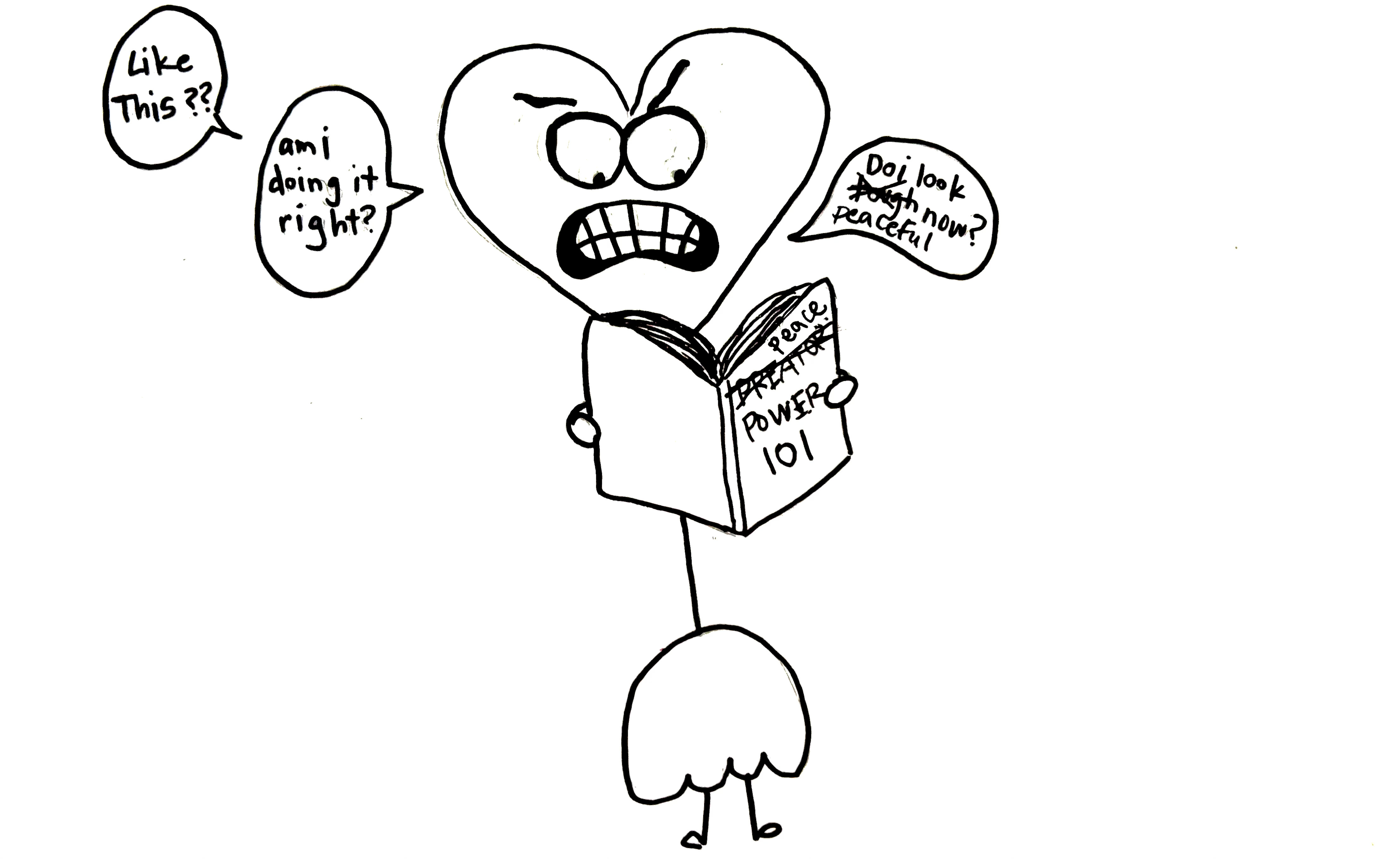
For many of us, this kind of spoiled altruism has made us jaded. It reminds me of a popular book that offered a clear directive: if you wanna get anywhere in life, you gotta be willing to take advantage of others. Though I won’t name the book (maybe you can guess it), it became a cultural phenomenon that received extremely polarized reviews, some saying that it was the most empowering book they ever read while others criticized it for selfish immorality. Personally, I could see both sides of the story, and was interested in what the author was intending. So, I listened to the author in a few podcasts and interviews until it became clear where the author was coming from, and what they meant to do: they’d been taken advantage of when they’d been kind, and they’d grown sick of getting cut in line.
Unsurprisingly, the resulting book was not a lovey-dovey guide for how to care for others. It was a “realistic” perspective that was made to empower. In a world of predators and prey, be the predator. Duh.
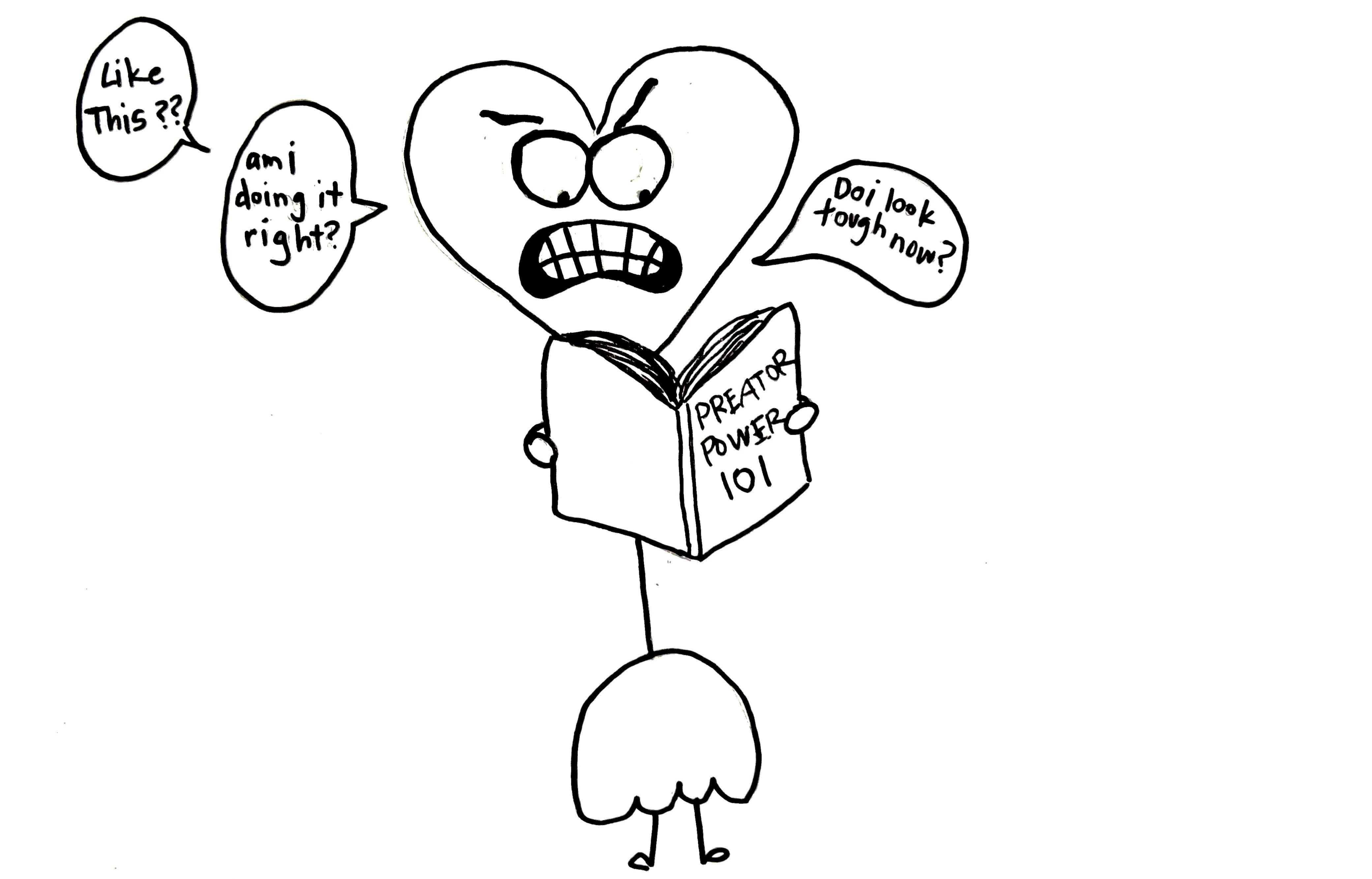
I get it: when we’ve given ourselves to love only to be left with crumbs, how do we continue to trust?
From the individual’s point of view, altruism just gets you screwed.
And yet, it happens -a lot, actually. Everyday someone pays the bridge toll for the car behind them. Everyday someone hands a homeless person a few bucks. Everyday people donate to causes that don’t directly benefit them. Some folks even go into full-on super-hero mode, risking their own lives to help others, like those who helped pull folks out of the twin towers, or Mother Theresa who put herself at risk of illness so that she could take care of the abandoned23.
I’m reminded of Viktor Frankl, a psychotherapist who was a prisoner in Nazi concentration camps. In his book, Man’s Search for Meaning, Frankl tells his stories of how he survived the horrors of the concentration camp, some of which would be considered pure altruism. For example, on once occasion, instead of taking a chance to escape, he volunteered to put his life at risk by caring for dying men who had an infectious disease. But, at that point, Frankl was no longer alive to survive: he was looking for meaning. In a reality where prisoners regularly ran into the wire (a heartbreakingly hopeless method of committing suicide), it was meaning (not safety) that helped Frankl to survive.
From a neurological perspective, however, Viktor’s story is puzzling: when our brains and bodies have been so abused, we’re unlikely to take a caring point-of view. Trauma can be utterly debilitating. Studies show24 that it’s normal for humans to become selfish when we’re stressed.
So what made Viktor different?
In the theory that he developed after he was freed (called Logotherapy), Frankl asserts that psychological healing is not found in becoming more successful or safe, but in the pursuit of meaning: Making a meaningful contribution. Giving meaningful love. Overcoming meaningful challenges.
With this in mind, perhaps the reason that unconditional love doesn’t make evolutionary sense is because we’re looking at it off-center:
What if life isn’t only about surviving and passing on genes? What if there’s more to life that gives it meaning?
For me, this meaning has come in love. I know it sounds sappy, but it’s true. When life gets rough, it’s loving you that gets me through.
Still, it’s not always easy. Every day feels like some kind of extended boot camp for the heart. Love can feel like an exercise when life is hard: a treadmill that makes us sweat while running around in circles; love can feel like it’s going nowhere fast, despite all the hurdles.
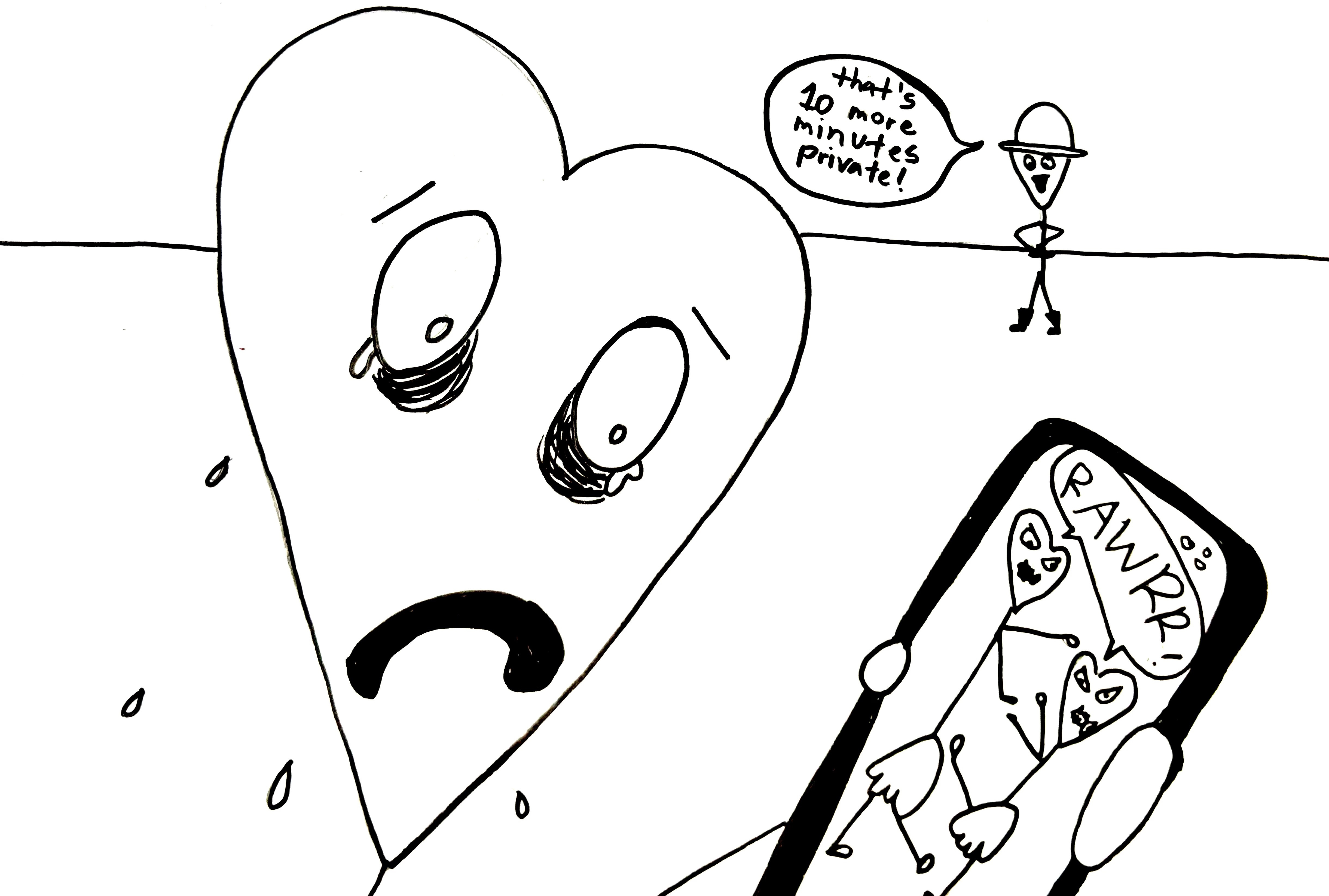
So even though love is absolutely what gives my life meaning, it can still be hard to keep my heart beating. In this series, I’ve been asking: Why?
If love’s so important, then why’s it so hard sometimes?
In the first article of this series, I explored the confusing question of what love actually is. How can we love if our aim is clouded?
In the second article, I explored will power. Can we force ourselves to love in our darkest hour?
In the third article, I looked at the blocks: When I’m scared, why does my heart get locked?
Now, I’m looking for hope. Sure, we’ve all got mammal brains that get confused in modern society, and that make it hard for us to love when we’re scared and stressed, but we’ve made it this far, haven’t we? Though the Doomsday Clock25 has been set at just minutes (or seconds) before midnight for years now, I find it amazing that we are, in fact, still here. Perhaps we’re bruised, and we may feel broken, but against the odds, we are persevering. In light of it all, I find humanity to be quite amazing.
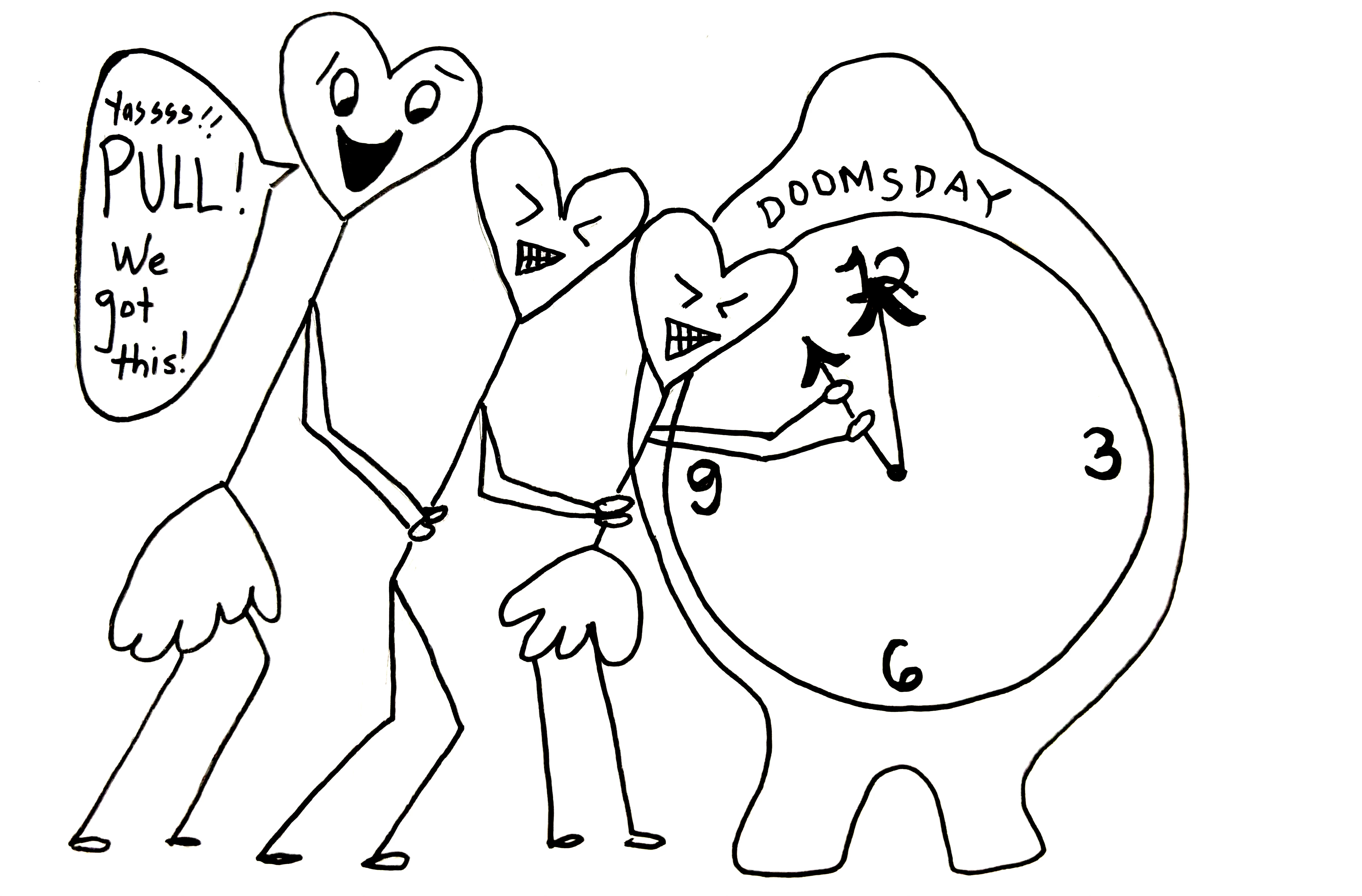
Still, while it’s nice to look on the bright side, there’s certainly a dark one too: When I’m at the end of my rope, what do I hold on to? How do I keep my head up when the sky is falling? In the grips of grief, how does my heart keep beating?
With that in mind, coming up in this series, I’ll share some of the science behind the heart’s resilience, which can be found (perhaps surprisingly) in emotional intelligence. The science of emotional intelligence confirms, with great confidence, that we can love -even through our toughest moments. With practice, patience, and forgiveness, we are capable of loving through this.
Still, peace can be hard to imagine amidst the wars and polarization, the lonely hearts and the faces screaming. I can’t blame anyone for losing hope, for throwing in the towel, or letting go.
I have.
But the amazing thing about love is that it never gives up, even when we, ourselves, have called it done. I know this true because it happened to me- you can’t imagine how much I hated the mirror I’d see. But slowly and surely my heart has defrosted as I found a friend, even in my reflection.
It came as a bit of a miracle. Though I have, indeed, studied and practiced, in my darkest hour, Something Else kept me going: a whisper that arose like a caring compass, a mysterious guide that led me through it.
It makes me think about those pre-mammalian daddies who cared for their young. Had they seen that that before? Had it been done? Whether they inherited parental association from their varanopid ancestors26, or they were the first in our line to come together, something in them, from god-knows-where, helped them figure out how to care.
Nowadays, there’s a lot of help for wounded hearts as scientists and psychologists have been studying hard. With that in mind, upcoming in this series I’ll share an overview of emotional intelligence -which offers nerdy possibilities for holding onto love, even when we’re panicked. What I love about the emotional intelligence model is that it asserts that no one is ever born with it (or the love that comes of it). Instead, it’s something that we can grow at any age, just like learning an instrument. Even the stodgiest of grey hairs can soften the eyes. Even the hardest of hearts can tenderize.
It gives me hope, for my own hardened heart, and for all of us who crave peace but find it so freaking hard.
But before I dive into the research ravines of how emotional intelligence can give us meaning and make us resilient, I wrote a song to celebrate the mystery behind it. Though science can see when care came onto the scene, what’s not known is where it came from, or how it came to be. Adaptations27 are amazing like that: right in the moment when we’re about to lose everything, when life has changed so extremely drastically, when we can’t rely on what we’ve been to carry us into our new conditions, somehow we change or figure it out, despite every reason to despair and doubt.
Whether we call it intelligence or mutant genes, I just can’t deny the mystery:
Isn’t it amazing how love shows up in history?
In our darkest moments, may love find us mercifully.
Read The Whole Series:


Listen to Love Songs to Our Nature
(and read the stories and science behind the songs)
Stay tuned to the heart of our nature:
on Substack Notes
on Email
https://phys.org/news/2019-09-sunflowers-nutrient-rich-soil-kind.html#:~:text=As expected, the plant sent,and for those around them.
https://plato.stanford.edu/archives/fall2005/entries/altruism-biological/#:~:text=In social insect colonies (ants,the alarm calls of others.
https://www.sciencedaily.com/releases/2013/08/130828092000.htm#:~:text=08/130828092000.htm-,The%20ancient%20closest%20relatives%20of%20mammals%20–%20the%20cynodont%20therapsids%20%2D%20not,aftermath%2C%20according%20to%20new%20research.
https://theconversation.com/what-an-unusual-fossil-reveals-about-parental-care-among-pre-mammalian-ancestors-158645
Ibid.
https://sercblog.si.edu/milk-before-dinosaurs-the-evolution-of-a-household-beverage/#:~:text=Milk—the%20white%2C%20calcium%2D,out%20and%20provide%20disease%20protection.
https://pubmed.ncbi.nlm.nih.gov/15451695/
https://askananthropologist.asu.edu/ups-and-downs-two-legged-walking#:~:text=1) It frees the hands,cannot cling to their mothers).
https://pmc.ncbi.nlm.nih.gov/articles/PMC11201025/#sec5-biology-13-00398
https://www.scientificamerican.com/blog/observations/why-humans-give-birth-to-helpless-babies/#:~:text=Rosenberg%20additionally%20noted—and%20I,animal.”%20Food%20for%20thought.
https://columbian.gwu.edu/nature-and-nurture-human-brain-evolved-respond-environment#:~:text=According%20to%20a%20study%20published%20in%20the,changing%20environments%2C%20including%20social%20and%20cultural%20contexts.
https://www.sfn.org/sitecore/content/home/brainfacts2/brain-anatomy-and-function/evolution/2015/brain-evolution-searching-for-what-makes-us-human
https://worldofpaleoanthropology.org/2025/03/20/at-the-dawn-of-parenting-an-evolutionary-tale-of-love-and-survival/#:~:text=Mathematical%20models%20and%20field%20studies,children%20go%20hand%20in%20hand.
https://onlinelibrary.wiley.com/doi/10.1002/evan.70016
https://pmc.ncbi.nlm.nih.gov/articles/PMC411253/
https://www.livescience.com/474-controversy-evolution-works.html
This idea was popularized in 1976 in The Selfish Gene by Richard Dawkins.
https://plato.stanford.edu/entries/altruism-biological/#:~:text=The%20basic%20idea%20of%20kin,of%20carrying%20the%20gene%20themselves.
https://www.nature.com/articles/308541a0#:~:text=Abstract,this article via your institution.
https://thedecisionlab.com/reference-guide/philosophy/reciprocal-altruism
https://www.ncbi.nlm.nih.gov/books/NBK424875/#:~:text=A%20growing%20body%20of%20evidence,some%20light%20on%20this%20issue.
https://plato.stanford.edu/entries/altruism-biological/#:~:text=The%20problem%20of%20altruism%20is,group%20containing%20a%20lower%20proportion.
https://asm.org/articles/2021/november/leprosy-the-separating-sickness#:~:text=“The%20biggest%20disease%20today%20is,the%20feeling%20of%20being%20unwanted.”&text=Mother%20Teresa%2C%20often%20dubbed%20“the,tireless%20devotion%20to%20charitable%20endeavors.
https://www.psychologytoday.com/gb/blog/neuroscience-in-everyday-life/202205/can-stress-make-us-more-selfish
https://thebulletin.org/doomsday-clock/
https://www.nationalgeographic.com/science/article/prehistoric-parenting-even-older-than-thought-fossils-show
https://education.nationalgeographic.org/resource/adaptation-survival/


